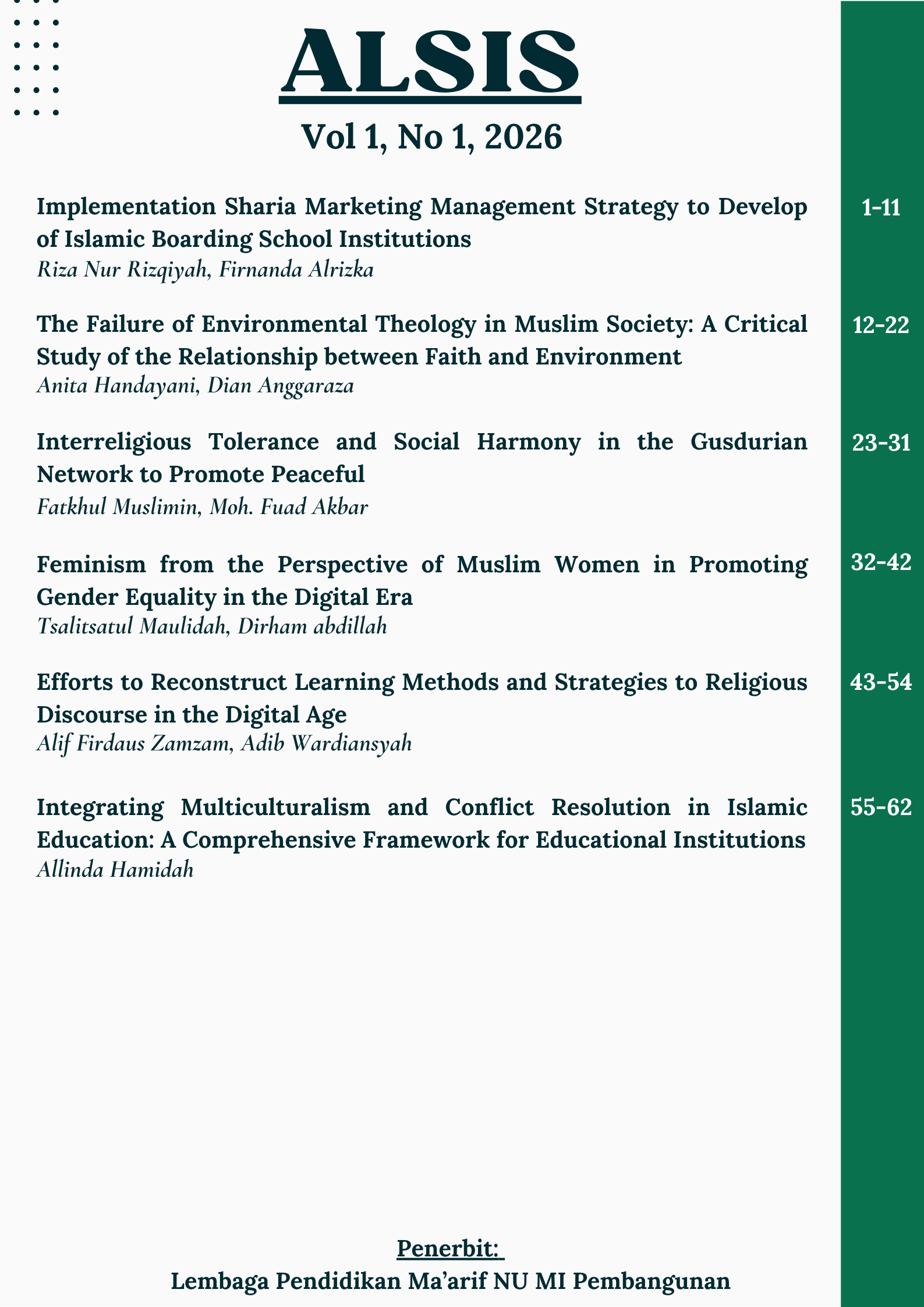
Peran Tarekat Dalam Dinamika Politik
Keywords:
Sufi Order, Political Dynamics, Charismatic Authority, Transnational Network, Electoral.Abstract
Historically recognized as a spiritual institution focusing on the purification of the soul (tazkiyatun nafs), the tarekat (sufi order) has evolved into a socio-political entity due to the strong charismatic authority of the mursyid (spiritual master) and patron-client relationships with the congregation. This dynamic creates massive social capital that attracts the attention of political elites looking to utilize it as a strategic tool for electoral victory. This study aims to comprehensively examine the mapping of the sufi order's political dynamics, the resulting impacts of political involvement, and the manifestations of the spiritual institution's strategic role on the socio-political stage. The research method employed is qualitative library research, in which a critical analysis is conducted on secondary data consisting of fundamental books, academic journals, and relevant historical documents. The results of the study indicate that the interaction between sufi orders and modern politics creates a space for symbiotic-mutualistic negotiations, where the loyalty of the congregation is exchanged for legal protection, logistics, or policy access. This political involvement carries a dual impact: externally and positively, it enhances the collective political bargaining position of the Muslim community and educates civil participation; however, internally and negatively, it risks degrading the ascetic values of the tarekat and triggering fragmentation as well as polarization among the congregation due to differing political choices. The manifestation of the sufi order's role proves to be central, acting both as an effective vote-gathering machine (vote getter) through the obedience of the baiat (allegiance oath) and as a provider of moral and religio-political legitimacy for candidates. This study concludes that the political resilience of the sufi order in the contemporary era is heavily supported by a geographically cross-border transnational network that functions as an informal diplomatic shield, enabling the tarekat to remain adaptive in maintaining its autonomy amid modernization.
References
Bruinessen, M. van. Tarekat Naqsyabandiyah di Indonesia: Survei Historis, Geografis, dan Sosiologis. Mizan. 1992.
Gellner, E. Muslim Society. Cambridge University Press. 1981.
Homans, G. C. Social Behavior: Its Elementary Forms. Harcourt, Brace & World. 1961.
Howell, J. D. Modernity and Islamic Spirituality in Indonesia's New New Age. Dalam G. Fealy & S. White (Ed.), Expressing Islam: Religious Life and Politics in Indonesia. ISEAS Publishing. 2007.
Muhtadi, B. Populisme Islam dan Elektoralisme: Dinamika Politik Kontemporer di Indonesia. Gramedia Pustaka Utama. 2020.
Mulyati, S. Peran Tarekat dalam Kelangsungan Hidup Masyarakat Kontemporer. Kencana. 2010.
Putnam, R. D. Making Democracy Work: Civic Traditions in Modern Italy. Princeton University Press. 1993.
Scott, J. C. Patron-Client Politics and Political Change in Southeast Asia. American Political Science Review. 1972.
Suryabrata, S. Metodologi Penelitian. Rajawali Pers. 2014.
Turmudi, E. Struggling for the Umma: Changing Leadership Roles of Kiai in Jombang, East Java. ANU E Press. 2006.
Voll, J. O. Islam: Continuity and Change in the Modern World. Syracuse University Press. 1994.
Weber, M. The Theory of Social and Economic Organization. Free Press. 1947.
Woodward, M. Java, Indonesia and Islam. Springer. 2011.
Zed, M. Metode Penelitian Kepustakaan. Yayasan Obor Indonesia. 2004.